Plenty of grown ups spend years hiding their smile in photographs, or quietly wondering whether it is “too late” to do something about their teeth. If that sounds familiar, you are in good company. Braces for adults are far more common than most people realise, and the questions you feel awkward asking are usually ones an orthodontist hears every week.
This guide answers seven of those questions honestly. It also explains how adult orthodontics works, what the process looks like, and how to look after your teeth along the way. It is general education, not a diagnosis. Only an in person examination can tell you what is right for your mouth.
What Are Braces for Adults?
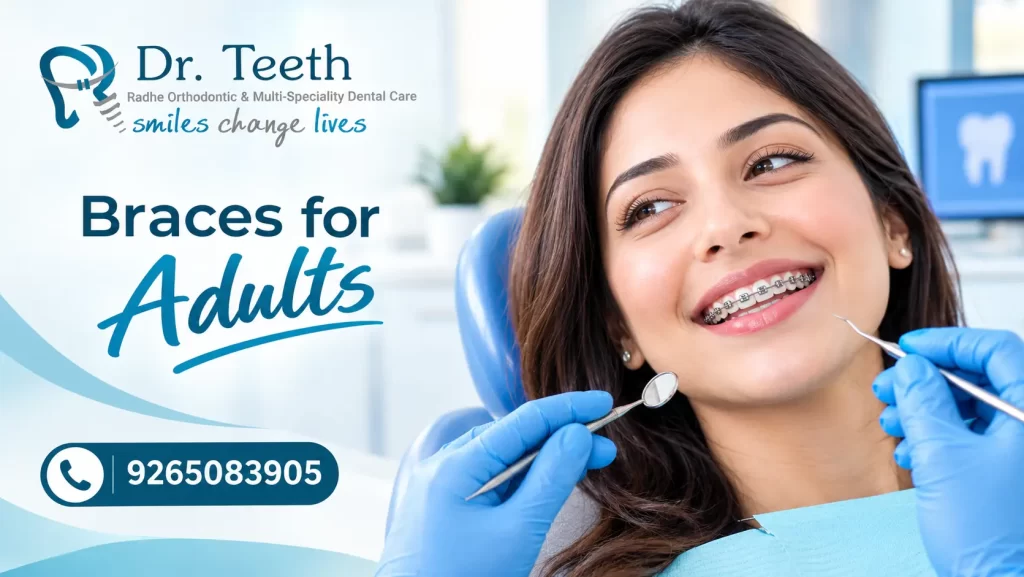
Dental braces are appliances that apply gentle, steady pressure to move teeth gradually into better positions. They are made up of orthodontic brackets (small attachments fixed to the teeth) and orthodontic wires that link the brackets and guide the movement.
Adult braces work on the same basic principle as those used by teenagers. The difference is that an adult’s jaw has finished growing, and adults are more likely to have fillings, crowns, gum concerns or worn teeth that the orthodontist must plan around. That is why adult orthodontic treatment is always planned individually.
Why Do Adults Consider Orthodontic Treatment?
The reasons are as varied as the people. Some never had the chance as teenagers. Others wore braces years ago, but their teeth drifted after they stopped using a retainer. Many simply feel the time, budget or confidence is finally right. Teeth straightening for adults is no longer seen as something only teenagers do.
Common motivations include:
- Feeling self conscious about their smile at work or in social settings
- Difficulty cleaning between overlapping teeth
- Uneven chewing or a bite that feels “off”
- Preparing the mouth for other dental work
- Wanting to support long term dental health
Common Dental Problems Adults May Want to Correct
Orthodontists assess more than how teeth look. Problems adults often ask about include:
- Crooked teeth that tilt or twist out of line
- Crowded teeth that overlap because there is not enough room
- Gaps between teeth
- Overbite, where the upper front teeth sit too far forward over the lower ones
- Underbite, where the lower teeth sit ahead of the upper ones
- Crossbite, where some upper teeth bite inside the lower teeth
Together, these are often described as misaligned teeth, and correcting them may involve bite correction as well as improving appearance. Braces for crooked teeth, for example, are usually planned with the bite in mind, not just how the smile looks.
7 Questions Adults Are Often Afraid to Ask
1. Am I Too Old to Get Braces?
Honestly, there is no upper age limit. Your teeth respond to braces because of healthy gums and the bone around them, not because of the year you were born. Plenty of people in their thirties, forties and fifties go through orthodontic treatment for adults every year.
The catch is that you need an examination first. Adults can be evaluated for treatment only after a proper check-up. If there is untreated decay or gum disease, that usually gets sorted out before braces go on. And not everyone is a suitable candidate, which a good orthodontist will tell you plainly.
2. Will Braces Be Very Noticeable?
Honestly, that depends on what you pick. Metal braces are the easiest to spot, because the steel brackets and wire show up when you smile. Ceramic braces use tooth-coloured or clear brackets, so they sit quietly against the teeth. Teeth braces for adults now come in more styles than they did a decade ago, and some clinics also offer clear braces or clear aligners. Those are not right for every bite, though.
A common experience is that the first week feels strange, and after that you stop thinking about them. Your orthodontist can walk you through which option suits your teeth, your work and your budget.
3. Are Braces Painful for Adults?
Most people describe it as soreness or pressure rather than real pain. Braces discomfort usually shows up a few days after the fitting, and again after each braces adjustment, then settles down. Calling any orthodontic treatment completely painless would not be accurate, but for most people it is manageable.
A few things that tend to help:
- Stick to softer foods for the first few days
- Put a little orthodontic wax over any bracket or wire that rubs
- Ask your orthodontist which pain relief is safe for you
If the pain is severe, a wire pokes you, or a bracket comes loose, call your clinic instead of waiting it out.
4. How Long Will I Need to Wear Braces?
Treatment duration is different for everyone, and nobody can honestly promise the length of braces treatment for adults before examining you. Many adults end up wearing braces for several months to a couple of years, and sometimes longer.
What can stretch or shorten it:
- How complex the crowding, spacing or bite problem is
- The type of braces used
- The health of your gums and bone
- How regularly you attend appointments and follow instructions
5. Can I Eat Normally While Wearing Braces?
Mostly yes, with some sensible adjustments. Food restrictions with braces exist to protect the brackets and wires from damage. Hard, sticky or chewy foods are the usual troublemakers.
Foods to be careful with:
- Hard sweets, ice and nuts
- Toffees, caramel and chewing gum
- Whole apples, raw carrots or corn on the cob (cut them into small pieces instead)
- Very sugary snacks and drinks, which raise the risk of decay around brackets
6. Can Braces Fix My Crooked or Crowded Teeth as an Adult?
Braces for crooked teeth and braces for crowded teeth are among the most common reasons adults visit an orthodontist. Braces can move teeth into better alignment, and this is the core of teeth alignment treatment.
Crowding is sometimes managed by creating a little extra room, and in some cases the orthodontist may recommend removing a tooth or using other space creating steps. Your orthodontist will explain what is realistic for you. Results depend on the individual case, so be wary of anyone who guarantees an outcome.
7. Will My Teeth Stay Straight After Braces Treatment?
Teeth have a natural tendency to drift back, which is why retention matters. Teeth stability after treatment depends largely on wearing your retainer as instructed. Without it, even beautifully aligned teeth can shift over time. More on this below.
Types of Braces Available for Adults
Options in dental braces for adults vary between clinics, but the main ones are:
- Metal braces: stainless steel brackets and wires, widely used and durable
- Ceramic braces: tooth coloured brackets that are less conspicuous
- Clear braces or clear aligners: near invisible options, suited to selected cases only
Metal Braces vs Ceramic Braces
| Metal braces | Ceramic braces | |
|---|---|---|
|
Appearance |
More visible |
Blend with tooth colour |
|
Strength |
Very durable |
Can be more delicate |
|
Staining |
Wires stay clean looking |
Some parts may stain if care is poor |
|
Cost |
Usually lower |
Usually higher |
Most dental braces for adults fall into one of these two groups, and both can deliver effective teeth alignment treatment when planned properly. Neither is automatically “best”. The right choice depends on your bite, budget, and how visible you want your braces to be.
What Happens During an Adult Orthodontic Consultation?
A thorough assessment is the foundation of orthodontic treatment for adults. A typical orthodontic consultation includes a discussion of your concerns and dental history, a check of your teeth, gums and bite, and usually X-rays or scans and photographs. The orthodontist then explains what they found, the options available and a rough outline of the plan.
This is your chance to ask everything on your mind, including the embarrassing questions. A good consultation should leave you informed, not pressured.
What to Expect Before Starting Treatment
Before braces are fitted, you may need a professional clean, treatment for any cavities or gum problems, and sometimes an extraction. This preparation protects your dental health during treatment.
Braces treatment for adults often begins with this kind of preparation. You should also be given a clear explanation of the likely duration, the appointment schedule, and the total cost of teeth braces for adults, including reviews and retainers. Whether you choose braces treatment in Ahmedabad or elsewhere, ask for it in writing.
Adult Orthodontic Treatment Process
The orthodontic treatment process generally follows these steps:
- Assessment and records: examination, X-rays, photographs and impressions or scans
- Treatment planning: choosing the type of braces and mapping the tooth movement
- Fitting: brackets are bonded to the teeth and the first wire is placed
- Regular adjustments: usually every few weeks, to change wires or tension
- Finishing: fine-tuning the bite and the final position of the teeth
- Removal and retention: braces are taken off and a retainer is provided
Oral Hygiene and Braces Care
Oral hygiene with braces takes extra effort, because food and plaque collect easily around brackets. Good braces care helps prevent stains, cavities and gum problems.
- Brush after meals and before bed, angling the brush around the brackets
- Use interdental brushes or a water flosser to clean under wires
- Floss daily with a floss threader
- Avoid sugary drinks between meals
- Keep your regular cleaning appointments
What Happens After Braces Are Removed?
Removal day is usually quick. The brackets are gently taken off, leftover adhesive is polished away, and your teeth are cleaned. Your orthodontist will then fit or give you a retainer. Your teeth may feel slightly sensitive at first, but this settles quickly. Many people feel that this stage completes their smile correction.
Why Retainers Are Important
A retainer holds teeth in their new positions while the surrounding gum and bone settle. Some retainers are removable, while others are thin wires bonded behind the teeth. Your orthodontist will tell you how long and how often to wear yours.
Skipping the retainer is one of the most common reasons results relapse, so treat it as part of the treatment, not an optional extra.
How to Choose an Orthodontist in Ahmedabad
If you are looking for braces treatment in Ahmedabad, these points can help you decide:
- Check that the orthodontist holds recognised specialist qualifications
- Ask how many adult cases they treat
- Look for clear explanations of options, costs and timelines
- Make sure the clinic is hygienic and well equipped
- Ask what follow up and retainer care is included
Among the dental care options in the city, My DrTeeth Radhe Orthodontic and Multi Specialty Dental Care offers orthodontic and general dental services under one roof, which some patients find convenient when other dental work is needed. Whichever clinic you consider, book a consultation and compare before deciding.
Frequently Asked Questions
Yes, treatment is widely available. Adults can be evaluated for orthodontic treatment based on their individual dental and oral health. Healthy gums and teeth are the main requirement, and an examination will confirm suitability.
For many people, yes. Teeth straightening for adults can make teeth easier to clean and can improve comfort and confidence. Whether it is worth it for you depends on your goals, your oral health and your budget, so discuss it openly with your orthodontist.
Expect some soreness after fitting and adjustments, usually for a few days. It varies from person to person and is generally manageable with soft foods and advice from your orthodontist.
Braces for crowded teeth in adults are commonly recommended, sometimes with extra steps to create space. The approach and outcome depend on your individual case.
You can consult a qualified orthodontist in Ahmedabad, such as the team at My DrTeeth Radhe Orthodontic and Multi Specialty Dental Care. Book an orthodontic consultation so your teeth can be examined and your options explained.